This week, I will discuss a book that I believe can greatly benefit you on your writing journey – Business Model Generation by Alexander Osterwalder and Yves Pigneur. Understanding business models is crucial for authors aspiring to succeed in the publishing industry. While writing a book is undoubtedly a creative process, it is also essential to approach it from a business perspective. This is where Business Model Generation comes in. It emphasizes the importance of designing a model that aligns with your personal vision and desired lifestyle. The authors provide valuable insights into why many people fail in their entrepreneurial endeavors and how to avoid common pitfalls. Osterwalder and Pigneur highlight the significance of developing a strong model that supports your creative work.
 Here are some key takeaways from the book:
- Holistic Approach: Business Model Generation takes a holistic approach to building connections between customer segments, value propositions, and revenue streams. A successful model clearly maps customer relationships, delivery channels, as well as key partnerships and resources.
- Value Proposition: The book helps you identify and define your unique value proposition(s) as an author. It guides you in understanding that your value proposition alone is pointless without building meaningful relationships and effective channels.
- Customer Segmentation: By exploring customer segmentation strategies, the book assists you in gaining a better understanding of your target audience. This knowledge allows you to tailor your writing and marketing efforts to meet their specific needs and preferences.
- Revenue Streams: Business Model Generation provides insights into different revenue streams available to authors. It delves into traditional publishing models, self-publishing options, and alternative income sources such as speaking engagements and merchandise.
The real magic is to use the model and the ideas as an exercise. When I first got this book, I had to use Post-it notes with the various business components and move them around in different sections on the map. Today, you can get an online template of the business canvas on services like Canva and do the work digitally. The book’s visual nature is meant to inspire you to do activities that help you set up relationships between the parts of your business and create better models. By thinking about how your current model is constructed, you begin to see new options. In today’s market, this can be a real competitive edge. When you consider how various customer segments may be served by different channels, like third-party retailers versus subscriptions, you can make the inner workings of your business better align with your customer experience. Developing a business modelI’ve included our initial Author Nation Canvas (made in Canva) below. You begin to see patterns forming. This isn’t about creating processes or workflows but understanding how the big ideas and concepts inform each other. For example, are there holes in channels that get the value propositions to the customer segments? The canvas will help you ensure all the pieces are in place to support your objectives. 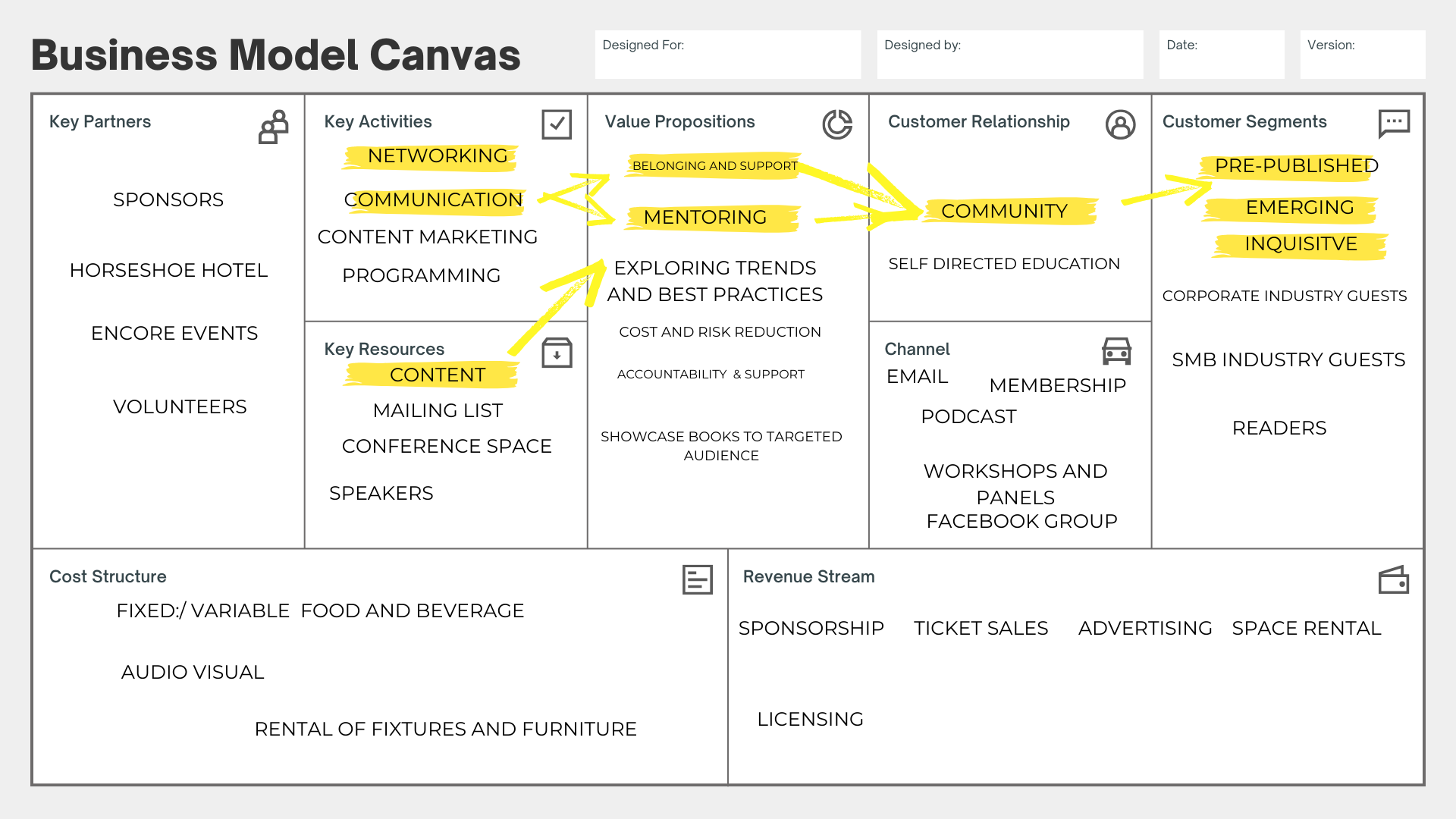
| I have to admit that revisiting this book and applying the ideas to Author Nation opened up my mind. It provided me with ways to promote emergent properties in the system, revealing the roles that the different parts of the canvas play in supporting bigger ideas like belonging, support, or risk reduction as the true value proposition of membership in the nation. This is a crucial point. The ticket is the price, but not the value. The value lies in an author creating their peer community, figuring out how to reduce risk as they build their business, and gaining access to new trends or customers. If you have been to a conference that you enjoyed, it is the delivery of the value proposition that leaves a lasting impression. Read: Boost Your Audience Base with This Step-By-Step Guide |
|
|