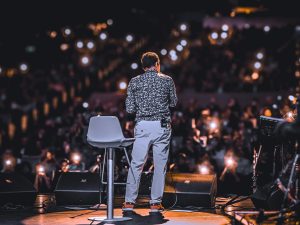
A few years ago, I sat in a packed conference room listening to a seven-figure author explain their “proven system” for success. Their voice carried absolute certainty. The audience scribbled notes frantically. It was compelling and convincing—a roadmap drawn by someone who had clearly reached the destination we all sought. Two years later, this same superstar announced they were stepping away from publishing indefinitely. Burnout, they explained. Creative exhaustion. This pattern has repeated itself so many times that I no longer see it as coincidence. It reveals a fundamental truth about creative success that nobody wants to discuss. The Certainty IllusionWhen we encounter successful authors speaking with absolute confidence about “what works,” we’re witnessing what psychologists call retrospective coherence—the human tendency to create logical narratives after the fact to explain complex, often random outcomes. These superstars aren’t deliberately misleading you. They’re trying to make sense of their own journey. The problem is they often misattribute their success to the visible, intentional strategies rather than the invisible natural rhythms that actually powered their achievement. It’s like a surfer explaining their technique while completely overlooking the wave that carried them to shore.
 The Burnout Epidemic Among SuperstarsLook closely at the upper echelons of publishing and you’ll notice a disturbing pattern:
- Bestselling authors who stop publishing for years after meteoric rises
- Successful series abandoned mid-arc as creators hit walls
- Award-winning writers whose output becomes increasingly sporadic
- Big names who disappear entirely, their creative voices silenced
This isn’t just bad luck or isolated incidents. It’s the inevitable result of a fundamental misunderstanding about creative energy. What the Oscillations Tell UsRemember what we’ve learned about natural creative cycles: Your creative energy naturally rises and falls—not just daily or weekly, but in larger patterns that span months and years. These oscillations aren’t signs of failure; they’re the natural rhythm of human creativity. The superstar problem emerges when authors achieve success during peak phases of their natural oscillation and then attempt to maintain that level indefinitely. It’s like trying to stay at the top of a wave forever—physically impossible and inevitably catastrophic. Consider this parallel from athletics: Even Olympic champions don’t maintain peak performance year-round. They periodize their training, alternating between intense preparation, peak competition, and essential recovery to sustain excellence over time. What Superstars Really Did RightWhen we strip away the success mythology, what did these high-achievers actually get right? Often, it wasn’t their conscious strategy but rather:
- Accidental Alignment: They happened to work in harmony with their natural creative rhythms rather than against them
- Intuitive Recovery: They unconsciously incorporated recovery periods that recharged their creative energy
- Fortunate Timing: Their peak creative periods coincided with market opportunities—a synchronicity they mistook for strategy
- Sustainable Pace (early on): Before fame changed expectations, they often worked at a naturally sustainable rhythm
The tragedy occurs when they try to formalize and accelerate these intuitive patterns without understanding the underlying oscillations. What worked naturally becomes forced, and the creative well runs dry.
 Learning Without BurningSo, how do we learn from successful authors without falling into the same traps?
- Extract Principles, Not Practices: Look for the underlying patterns in their success stories, not the specific tactics that may only work during peak energy phases.
- Watch What They Do, Not What They Say: Notice their actual work rhythms, recovery periods, and energy management, which often contradict their stated “hustle” philosophy.
- Study Their Entire Arc: Pay attention to how their approach changes over time—the initial methods that brought success often differ dramatically from what sustains their careers long-term.
- Track Your Response: Use your Progress Pulse to monitor how their advice affects your creative energy—does following their system enhance or deplete your natural flow?
- Be Confident to Call Bullsh*t: If it seems too good to be true, it likely is.
Your Implementation PlanThis week, I want you to examine your relationship with “superstar advice”:
- Audit Your Influences: Identify which successful authors have shaped your expectations about creative work and production.
- Reality Check Their Rhythms: Research their actual production patterns—not what they claim, but what they’ve actually published over time. Look for the oscillations they may not acknowledge.
- Assess Your Adoption: Note which “superstar strategies” you’ve implemented that might be fighting against your natural creative rhythm.
- Recalibrate Your Pace: Using your Progress Pulse data to identify your sustainable creative velocity—the pace that maintains forward momentum without depleting your resources.
Case Study: The Truth Behind a LegendConsider Ernest Hemingway—often portrayed as the quintessential disciplined writer who worked steadily each morning. What’s less often discussed is how his creative output actually fluctuated dramatically throughout his career, with intense productive periods followed by significant gaps. His legendary daily word count of around 500 words was sustainable precisely because it honored his natural rhythm rather than forcing excessive production. Hemingway didn’t write at the same pace continuously for decades. He experienced natural oscillations, with projects moving between what we’d now call “Brewing,” “Building,” and “Better” stages at varying speeds. His success came not from constant production but from understanding and respecting his creative pulse.
 The Sustainable AlternativeInstead of chasing the superstar myth, imagine building a career that respects your creative oscillations—where periods of intense production are balanced with essential recovery, where success is measured by sustainability rather than spikes, and where your creative energy remains renewable rather than depleted. This perspective isn’t lowering your ambition—it’s ensuring you’ll have the longevity to actually achieve it. Looking AheadNext week, we’ll explore how to design your own personalized content calendar based on your natural creative rhythms rather than market pressure or superstar comparisons. This Week’s ChallengeIdentify one “superstar strategy” you’ve been trying to implement that consistently drains your creative energy. Release it completely for one week. Track what happens to your Progress Pulse board when you remove this external expectation and honor your natural rhythm instead. Remember that the most impressive creative achievement isn’t publishing ten books in a year—it’s the ability to produce meaningful work decades into your career because you’ve mastered the art of sustainable oscillation. |